
A functional movement screen is seven short tests of how you squat, step, lunge, reach, raise a leg, push up, and steady your trunk. A coach scores each one from 0 to 3, for a maximum of 21, and notes any pain or left-right difference. It isn't a diagnosis, and the research doesn't support using the score to predict injury. What it does well is show your coach where your program should start.
- The screen is 7 movement tests, each scored 0 to 3, for a top score of 21.
- Pain on any test scores a 0 and is a reason to see a physical therapist or physician.
- The well-known cutoff of 14 came from 46 professional football players, not adults over 50.
- Research reviews from 2015 and 2017 found the score is a weak predictor of injury.
- Its real value is programming: your lowest scores and left-right gaps set your starting point.
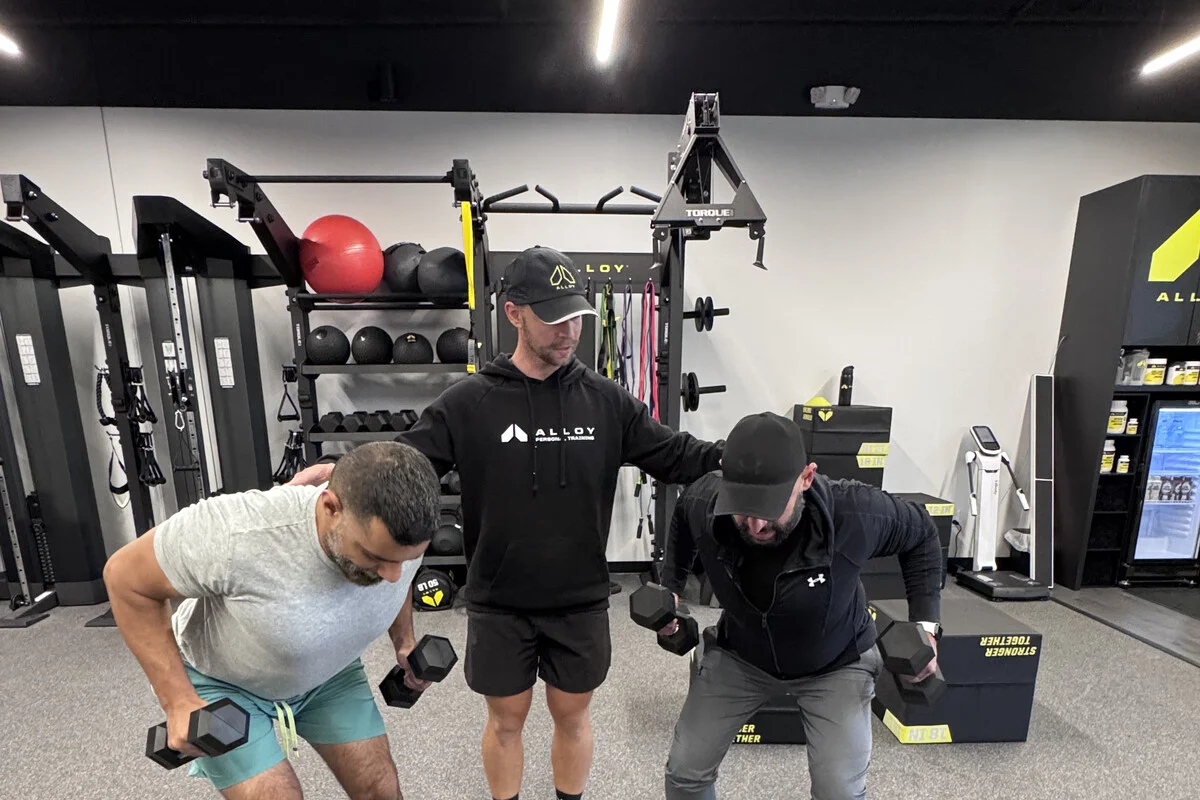
The 7 tests of a functional movement screen
The screen's creators described it in a 2006 paper, and they were clear about its purpose. It checks whether you can move above a minimum standard, not whether you move perfectly. Nobody is expected to walk in and score 21. You'll also hear it called the FMS or the FMS test.
The equipment is simple: a dowel, a string hurdle, a 2x6 board, and a tape measure. The organization behind the screen says it takes about 10 minutes. The dowel gives your coach a straight line to judge your posture against.
Here are the seven, as the developers named and described them.
| Test | What you do | What your coach watches |
|---|---|---|
| Deep Squat | Hold a dowel overhead and squat as low as you can | Heels stay down and the dowel stays over your feet |
| Hurdle Step | Step over a string set at shin height, tap your heel, and return | Balance on the standing leg, with hips and knees in line |
| In-Line Lunge | Stand with both feet in a line on a narrow board, dowel along your spine, then lunge | The dowel stays against your head, upper back, and tailbone |
| Shoulder Mobility | Make two fists and reach behind your back, one hand over the top, one from below | The distance between your fists |
| Active Straight Leg Raise | Lie on your back and raise one straight leg as high as you can | How high the leg rises while the other stays flat |
| Trunk Stability Push-up | Do one push-up from a set hand position | Your body rises as one unit, with no sag at the low back |
| Rotary Stability | On all fours, extend the same-side arm and leg, then bring elbow to knee | Control and balance through your trunk |
Three tests end with a short clearing check. The shoulder mobility test gets a shoulder clearing move, and the push-up gets a press-up that arches the low back. The rotary stability test gets a rock-back that rounds it, and pain on any clearing check makes that test a 0.
How scoring works, and why pain is a zero
Each test gets a whole number from 0 to 3. A 3 means you met the standard, and a 2 means you got there with a workaround. A 1 means you couldn't complete the pattern.
Most of the tests are done on each side. Under the screen's scoring rules, the lower of your two scores counts toward the total of 21, and the coach notes the gap between sides. That gap is often the most useful line on the sheet.
Pain overrides every other rule. The same rules say that if pain occurs, the test scores a 0, the painful area is noted, and further assessment by a professional follows. Your coach won't screen through pain or guess at its cause. That's a job for a physical therapist or physician, and we're glad to coordinate with yours.
The 2006 descriptions also set different push-up standards for men and women. For a 3, men start with thumbs in line with the forehead, women with thumbs in line with the chin.
A 2012 study of 64 service members found different raters scored people fairly consistently. Even so, a score had to move by more than about 2 points to count as real change. Going from 12 to 13 is noise, while 11 to 14 is worth a conversation.
What the number can and cannot tell you
Most people have heard that 14 is the line. That cutoff comes from a 2007 study of 46 professional football players followed through one season. Players at 14 or below were more likely to have a serious injury. That's a useful finding for a football staff and a shaky rule for a 58-year-old coming back to training.
Bigger reviews have been less kind. Moran and colleagues (2017) reviewed 24 prospective studies and found strong evidence of only a small association, in male military personnel. Their conclusion was direct: the strength of that association "does not support its use as an injury prediction tool." A separate 2017 pooled analysis of 9 studies, mostly athletes and military, did find 2.74 times the odds of injury below 14, and in the same breath flagged significant concerns about the screen's validity.
A 2015 pooled analysis of active adults found the screen caught only about 1 in 4 people who went on to get hurt. Its sensitivity was 24.7%, so most later injuries happened to people the cutoff never flagged. These reviews share many of the same underlying studies, including the football one. Put that next to the 2012 rater data and the picture is clear: the screen is consistent to score and weak at prediction.
That's why we treat the screen as a map for programming, not a crystal ball. It tells your coach which patterns to load now, which to build toward, and which side needs extra attention. It can't tell anyone what your next year holds.
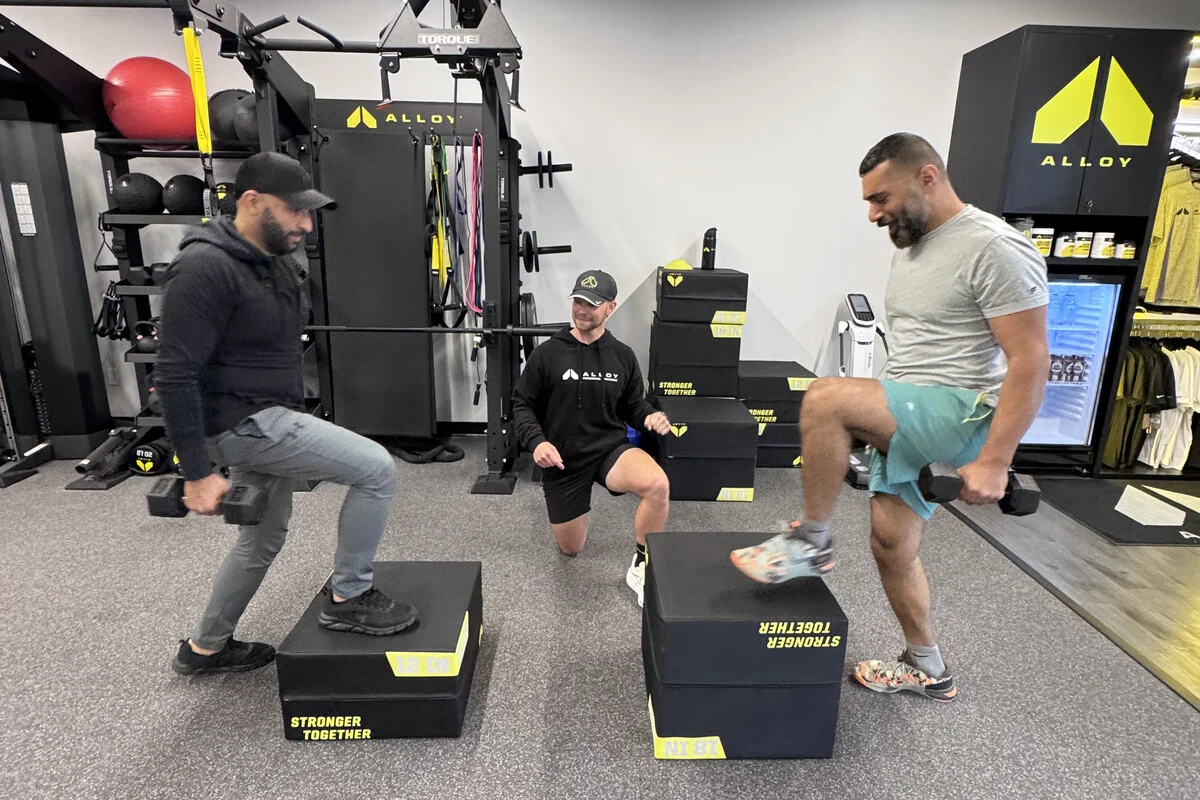
What "normal" looks like after 50
Scores tend to run lower as the years add up, and that's expected. In a 2016 study of 97 active adults aged 52 to 83, the average score was 12.2 out of 21. They were active by design, and their average still sat below the football cutoff.
The age groups told a consistent story. Participants in their early 50s averaged 15.7, those aged 65 to 69 averaged 11.4, and those 75 and older averaged 10.4. Scores also ran higher in people who were more active.
Two tests gave the group the most trouble. The deep squat averaged 1.1 out of 3, the lowest of the seven, and the trunk stability push-up came next at 1.5. More than half the group had a left-right difference on at least one test.
An 11 at 67 is typical, not a verdict. It's where the plan starts.
The patterns aren't abstract, either. The hurdle step is the step over a snowbank on York Avenue in January. The in-line lunge is the balance you use on uneven ground, like the wooded hiking trails at Braemar Park.
What your coach changes based on the screen
The screen earns its 10 minutes here. Your lowest scores and any left-right gap shape your first weeks of training. The examples below are coaching judgment rather than research findings, but they show how a score becomes a plan.
A 1 on the deep squat often means goblet squats to a box plus ankle mobility work before the squat gets deeper or heavier. A 1 on the active straight leg raise often means hinging from blocks before pulling weight from the floor. A 1 on shoulder mobility often means a landmine press in place of pressing overhead.
A left-right gap means extra single-leg and single-arm work, with the lower-scoring side getting more sets. A 0 keeps that pattern out of your program until a clinician weighs in. Patterns that scored well get loaded from the start.
This is why two people in the same six-person, 55-minute session are often doing entirely different work. One is squatting to a box while the other presses from a landmine, and the coach is watching both. That's how small group personal training stays personal.
Scores do move with training. A 2020 randomized study of 96 firefighters scoring 14 or below tested an 8-week exercise program. The training group's average rose from 10.6 to 17.8, while the control group went from 11.8 to 12.1. That study tracked scores rather than injuries, in firefighters rather than adults over 50.
A sensible point to re-screen is about 8 weeks in. Most Alloy members train two or three times a week, so that's 16 to 24 sessions of focused work. Your coach will look first at whether the gaps closed, then at the total.
What happens at your Starting Point Session
The functional movement screen is the movement assessment inside our Starting Point Session. The visit has four parts: the screen, a conversation about your goals and history, an InBody scan, and a plan built around you.
Wear clothes you can squat and lunge in. You don't need to warm up, because the point is to see how you move on an ordinary day. With your coach explaining as you go, plan on 10 to 15 minutes for the screen.
Goals can be specific. Walking the Nine Mile Creek Regional Trail through the winter, getting up off the floor without using your hands, or carrying groceries upstairs all count. Your coach builds the plan from two things: what you want to do and how you move today.
The InBody scan measures skeletal muscle mass, body fat percentage, visceral fat level, total body water, and a segment-by-segment breakdown. If you'd like the scan on its own first, book a free InBody scan, no membership required.
Then your coach walks you through the plan, a membership recommendation, and straightforward pricing. Our guide to what actually happens at your first session covers the rest in detail.
Start with the screen
Alloy Personal Training Edina Southdale opened in October 2026, minutes from Southdale Center. The screen is the first 10 minutes of a coaching relationship, followed by your goals, an InBody scan, and a plan built around you. It's a no-pressure visit. Book your Starting Point Session, and ask about Founding Membership if you'd like first pick of session times and priority onboarding.
This article is general fitness information, not medical advice. Talk with your physician before starting a new exercise program, especially if you have a diagnosis, a recent surgery, or activity restrictions.
Frequently asked questions
How long does a functional movement screen take?
The organization behind the screen says it takes about 10 minutes. With your coach explaining as you go, plan on 10 to 15. At a Starting Point Session, the screen sits inside a longer visit that also covers your goals and an InBody scan.
What is a good FMS score?
The maximum is 21, and there's no passing score. The often-quoted cutoff of 14 comes from a 2007 study of 46 professional football players. In a 2016 study, active adults aged 52 to 83 averaged 12.2. The most useful results are any 0, any 1, and any left-right gap.
Does the functional movement screen test predict injury?
Not reliably, according to the research. Moran and colleagues (2017) reviewed 24 prospective studies and concluded the association "does not support its use as an injury prediction tool." A 2015 pooled analysis found the screen flagged only about 1 in 4 people who were later injured. It works best as a guide for programming.
Can you improve your movement screen score?
Yes, scores do move with training. In a 2020 randomized study of firefighters scoring 14 or below, 8 weeks of exercise raised the training group's average from 10.6 to 17.8. The control group barely moved. That study tracked scores, not injuries, so it doesn't show that a higher score lowers injury risk.