
A 17-year national study found snow shoveling sends roughly 11,500 Americans to the emergency room every year. More than half of those visits came from straining while lifting, and lifting is a skill you can train.
- A 17-year national study estimated about 11,500 snow shoveling ER visits a year in the US.
- The lower back was the most-injured body region in that study, at 34% of cases.
- Shoveling is a hinge, lift, carry, and twist done in the cold, so those are the patterns to train.
- Two strength sessions a week for 4 weeks builds a real base before the deep snow piles up.
- The American Heart Association says people who've had bypass surgery or angioplasty should not shovel snow.
In the Twin Cities, the median date for the first one-inch snowfall is November 15 in records back to 1884, according to the Minnesota DNR. So by the time you read this, the first real shoveling morning has probably already come. The rest of the season is still ahead. Below: what the injury data shows, which strength work carries over to the driveway, and a 4-week plan. We also cover when you shouldn't pick up a shovel at all.
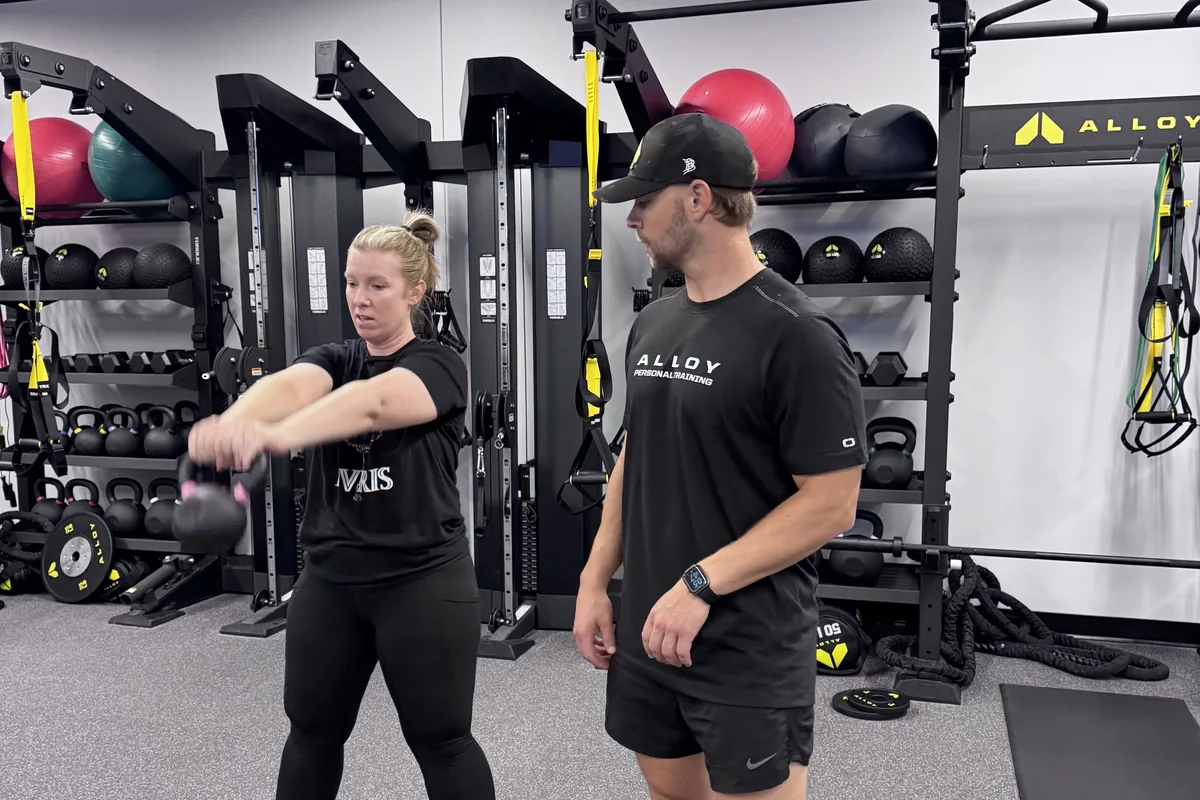
Shoveling is an athletic event nobody warms up for
Shoveling is a workout you didn't schedule. You bend at the hips, lift a loaded blade, carry it a few steps, and twist to throw it. Then you repeat that dozens of times.
That's four movement patterns stacked together: a hinge, a lift, a carry, and a rotation. Coaches program each of them separately, with warm-ups and rest. A driveway gives you none of that.
The setting makes it harder. It's often early, before work, on a cold morning. The footing is slick. The load changes with every scoop, because wet snow and fluffy snow are not the same job.
And it isn't a one-time event. The Twin Cities averaged 54.0 inches of snow per season over 1981 to 2010, per the Minnesota DNR State Climatology Office. That's a whole season of these sessions. If you had a race with that many heats, you'd train for it.
What the injury data actually shows
The best numbers come from a 17-year national study published in the American Journal of Emergency Medicine. Researchers estimated that 195,100 people were treated in US emergency departments for snow shovel-related injuries and medical emergencies from 1990 to 2006. That averages out to about 11,500 a year.
Here's how those cases broke down, according to the study:
- Acute musculoskeletal exertion was the most common cause, at 54% of cases. That's the strain from the work itself.
- Slips and falls came next, at 20%.
- The lower back was the most-injured body region, at 34%.
- Soft-tissue injuries made up 55% of diagnoses.
- 96% of incidents happened in or around the home.
That last number matters. These aren't contractors on job sites. They're homeowners clearing their own walks. If your back is already a sore spot, our post on strength training with back pain after 40 covers how to train around it safely.
The study also tracked heart-related cases. Cardiac events were about 7% of cases. But they accounted for more than half of hospitalizations and all 1,647 deaths the study recorded. In its release on the study, Nationwide Children's Hospital described that as nearly 100 deaths each year.
Age showed up clearly too. The study found adults 55 and over were 4.25 times more likely than younger patients to have cardiac-related symptoms while shoveling. Among adults 55 and over, men were twice as likely as women to have them. We come back to the heart side of this below, because it changes the advice.
The strength work that transfers to the driveway
Most snow shoveling injury prevention advice stops at shovel tips. Strength training won't clear your driveway for you. What it does is make each part of the job feel familiar instead of foreign. Here are the patterns that carry over most directly.
The hip hinge
The hinge is how you bend to load the blade. Deadlifts, kettlebell deadlifts, and Romanian deadlifts all teach it. The goal is bending at the hips with a long spine, instead of rounding your back to reach the snow.
The squat and lift
Getting under a heavy scoop means bending your knees and driving up. Goblet squats and box squats train that. A lift feels easier when your legs can take more of the work.
The loaded carry
Every scoop gets carried, even if only a few steps. Farmer carries and suitcase carries build grip and teach your trunk to stay steady under a load. Suitcase carries, with weight in one hand, look a lot like holding a shovel off to one side.
Rotation and anti-rotation
The throw is the riskiest-looking part of the motion. Pallof presses train your core to resist twisting. Cable or band chops train you to rotate under control, turning through your hips and feet instead of just your lower back.
Single-leg strength
Slips and falls were 20% of the study's cases. Strength can't melt ice. But split squats and step-ups build comfort on one leg, which is what uneven footing asks of you.
If you're new to lifting, our page on strength training over 40 explains how coached programs build these patterns from the ground up.
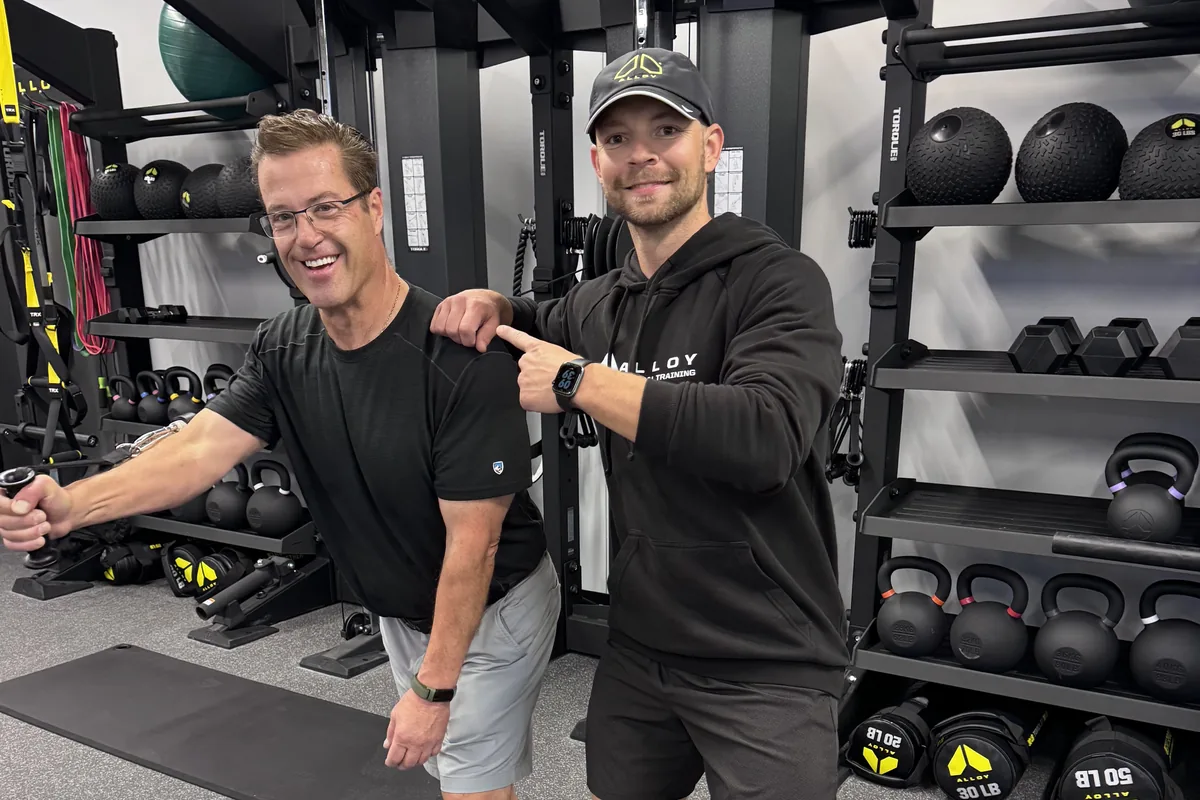
A realistic 4-week on-ramp
You don't need a long runway. Four weeks of steady work, two sessions a week, builds a real base. Each session runs about 30 to 40 minutes. Keep the loads light enough that your form stays clean.
Week 1: Learn the patterns. Do 2 sets of 8 to 10 reps of a kettlebell deadlift, a goblet squat, and a Pallof press. Add 2 rounds of a 30-second farmer carry. Use light weights. This week is about how the moves feel, not how much you lift.
Week 2: Add a little load. Keep the same moves. Go to 3 sets, and nudge the weight up if last week felt easy. Add a split squat for 2 sets of 8 per leg.
Week 3: Lengthen the carries and add the turn. Switch to suitcase carries, one side at a time, for 40 seconds. Add a cable or band chop for 2 sets of 8 per side. Hold your squat and deadlift weights steady and own the reps.
Week 4: Put it together. Finish each session with a short circuit. Do a deadlift, a goblet squat, a suitcase carry, and a chop back to back. Rest, then repeat 2 or 3 times. That circuit is the closest thing to a driveway you can practice indoors.
The principle running through all four weeks is small, steady increases. Our post on progressive overload after 40 explains why that beats big jumps.
Between sessions, keep moving outdoors. Nine Mile Creek Regional Trail runs through Edina and is plowed in winter, so a brisk walk stays possible after a storm. Skating at Centennial Lakes Park is another way to stay active and on your feet. For more on keeping your routine through the cold months, see our guide to staying strong through a Minnesota winter.
When you shouldn't shovel at all
For some people, the right move is to not shovel. The American Heart Association warns that many people may face an increased risk of a heart attack or sudden cardiac arrest after shoveling heavy snow.
The AHA's 2022 release cites one study where participants' heart rates passed 85% of maximal after just two minutes of shoveling. Barry Franklin, lead author of an AHA scientific statement on exercise-related heart events, was direct. He said people who have had bypass surgery or coronary angioplasty "simply should not be shoveling snow."
The AHA lists these as higher-risk factors:
- A sedentary lifestyle
- Obesity
- Smoking
- Diabetes
- High cholesterol or high blood pressure
- A prior heart attack or stroke
If any of those describe you, the training plan above isn't a workaround. If you have a history of heart disease, clear shoveling and any new training with your doctor first. Hiring a service or trading favors with a neighbor is a perfectly sound choice.
If you are cleared to shovel, the AHA's guidance is practical:
- Push the snow instead of lifting it. The AHA notes pushing is physically easier than lifting and throwing.
- Take short breaks. Don't try to clear the whole driveway in one go.
- Stop immediately if you feel chest pain or pressure, lightheadedness, or heart palpitations.
- Call 911 if those symptoms don't go away.
A snow blower isn't a safe workaround either. The AHA says snow blowers can raise heart rate and blood pressure quickly, so a blower is not a loophole.
Start with one session
The simplest first step is a free Starting Point Session at Alloy Personal Training Edina, by Cub Foods Southdale. It covers your health history and goals, an InBody scan, a movement assessment, and an introductory workout, so your program fits your body before the next storm. Book your Starting Point Session and we'll build your plan from there.
This article is for general information only and is not medical advice. Talk with your doctor before shoveling snow or starting a new exercise program. This matters most if you have heart disease or other health conditions.
Frequently asked questions
What is the most common snow shoveling injury?
Strain from the work itself is the most common. A national study found acute musculoskeletal exertion caused 54% of snow shovel-related ER visits. The lower back was the most-injured area, at 34% of cases.
Is it better to push snow or lift it?
Push it when you can. The American Heart Association says pushing snow is physically easier than lifting and throwing it. When you do lift, take smaller scoops and short breaks.
Who should not shovel snow?
The American Heart Association says people who've had bypass surgery or coronary angioplasty should not shovel snow. It also flags people with heart disease risk factors, like smoking, diabetes, or high blood pressure. If you have a heart history, talk with your doctor before you shovel.
What exercises help with snow shoveling?
Train the patterns shoveling uses: the hip hinge, the squat, loaded carries, and controlled rotation. Kettlebell deadlifts, goblet squats, suitcase carries, and Pallof presses cover all four. Start light, two sessions a week, and add weight gradually.