
Your 50s are the right decade to start strength training because you finally have the time, and what you build now carries forward. Adults 55 to 64 report about 1.5 more hours of leisure a day than adults 35 to 44. Across 47 studies of adults 50 and over, leg-press strength rose about 29%, and research links midlife strength with independence decades later. The window for getting back in shape after 50 is open, so use it on the work that compounds.
- The time is there: adults 55 to 64 report 5.3 hours of leisure a day (BLS, 2024).
- Midlife strength is linked with later independence, and grip strength is a marker, not a cause.
- Adults 50 and over gained about 29% in leg-press strength across 47 studies, and harder training was linked to bigger gains.
- Train toward real loads: a two-year-old (27 to 28 lb), a case of water (29 lb), a full checked bag (50 lb).
- New habits took an average of 66 days to feel automatic in one study, so plan for two months, not two weeks.
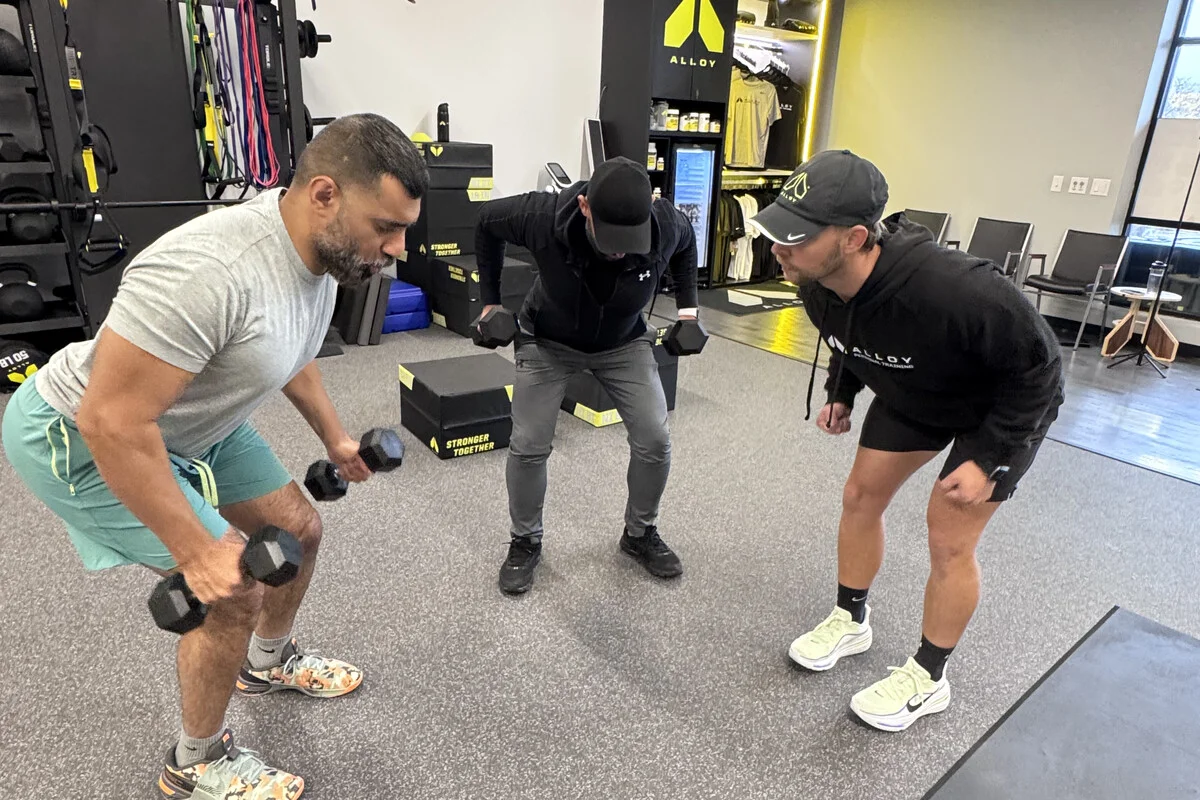
Getting back in shape after 50 starts with 90 minutes a day
For years, the kids' calendar ran yours. Practices, pickups, conferences, the permission slip due Friday. Then the last one leaves, and the house goes quiet.
The data backs up the feeling. In the 2024 American Time Use Survey, adults 55 to 64 reported 5.3 hours of leisure and sports time a day. Adults 35 to 44, an age when many households run on school schedules, reported 3.8 hours, the lowest of any age group. That's a gap of roughly 90 minutes a day.
Now the less flattering number. The same survey found that Americans 15 and older averaged 0.31 hours a day on sports, exercise and recreation. That's about 19 minutes.
The math improves again later. Adults 65 to 74 reported 6.5 hours of leisure a day, so there's even more room for exercise after retirement. Better to arrive there with the habit already built.
In Edina, this happens on a schedule. Edina High School's 2025-26 profile lists a senior class of 690, so by fall, about 690 families have one fewer calendar to run. The city's median age is 44.9 in the Census Bureau's 2024 five-year estimates, so you have plenty of company.
Empty nester fitness needs two or three hours a week that you protect, not a new personality. That's the honest version of getting back in shape after 50.
The strength you have at 55 shows up at 75
When people search for strength training for longevity, most of the evidence underneath is observational. It can't prove cause and effect. It is consistent, though, and it points one way.
A 1999 study in JAMA drew on grip tests given to 6,089 healthy men aged 45 to 68 between 1965 and 1970. Twenty-five years later, researchers assessed 3,218 survivors. Compared with the strongest third, the weakest third at midlife had more than twice the risk of self-care disability. They also had 2.87 times the odds of walking at 0.4 meters per second or slower, a very slow pace.
Keep two cautions in mind. The study included only men, and grip strength is a marker, not a cause. The lesson isn't to buy a hand gripper. It's that men who were stronger at midlife were less likely to struggle with self-care 25 years later.
The next study speaks to the obvious worry, which is that you missed your chance. The 2019 NIH-AARP study followed 315,059 adults aged 50 to 71 and compared activity patterns across adulthood. People who became more active between ages 40 and 61 had a 35% lower risk of death during follow-up than people who stayed inactive. That was about the same as people who'd been active all along.
The authors put it plainly: "midlife is not too late." Their study measured leisure activity in general, not lifting. Read it as a case for starting, not a case for any one program.
Is 55 too late to start lifting?
No, and the research isn't close. A 2010 analysis pooled 47 studies of 1,079 adults 50 and over. Leg-press strength rose about 29%, chest press about 24%, and knee extension about 33%. Higher-intensity training was associated with greater improvement.
That last line matters for anyone told to "be careful" after 50. Careful often turns into light weights and endless reps, and this analysis points the other way. Careful should mean well coached, with weight that's genuinely challenging for you.
A 2011 analysis of 49 studies and 1,328 participants found an average lean-mass gain of 1.1 kg, about 2.4 lb. Older participants gained less. The authors suggested that earlier participation yields better outcomes, which is the case for your 50s in one sentence.
At the far end, a 1994 trial of 100 frail nursing-home residents, average age 87, tested 10 weeks of lifting against a control group. Strength rose 113% in the lifters, against 3% in the controls. Nobody is promising a 55-year-old 113%. The point is that strength still responded to training at 87.
For the longer version, read our post on building muscle after 60. Our page on strength training for adults 40 and over covers how we program it.
What does "strong" actually buy you?
It buys you the everyday lifts: a toddler, a case of water, a suitcase. Strong is the weight of the things your life asks you to pick up and carry, not a number on a whiteboard.
Here's how the lifts in a session map to loads outside it.
| The lift | Real-world load | What it's for |
|---|---|---|
| Goblet squat | 27 to 28 lb | Picking up a two-year-old |
| Loaded carry | 29 lb | Carrying a case of water in from the car |
| Deadlift | 50 lb | A bag of ice melt in January, or a full checked bag |
| Overhead press | A packed carry-on | Lifting it into the overhead bin |
The two-year-old is the CDC median weight at 24 months (girls 27 lb, boys 28 lb). The case is a 24-pack of 16.9 oz bottles. The 50 lb is both Morton's largest Safe-T-Salt bag and Delta's checked-bag limit, where overweight fees begin at 51 lb.
These are targets, not entry requirements. Your coach sets your starting weight from your movement assessment and builds from there.
Travel is the other big one. AARP's 2026 travel survey of 1,189 adults 50 and over found 64% expected to travel in 2026, anticipating 3.9 trips on average. One in four of those trips includes three generations. That's a lot of bags to lift and a lot of hours on your feet.
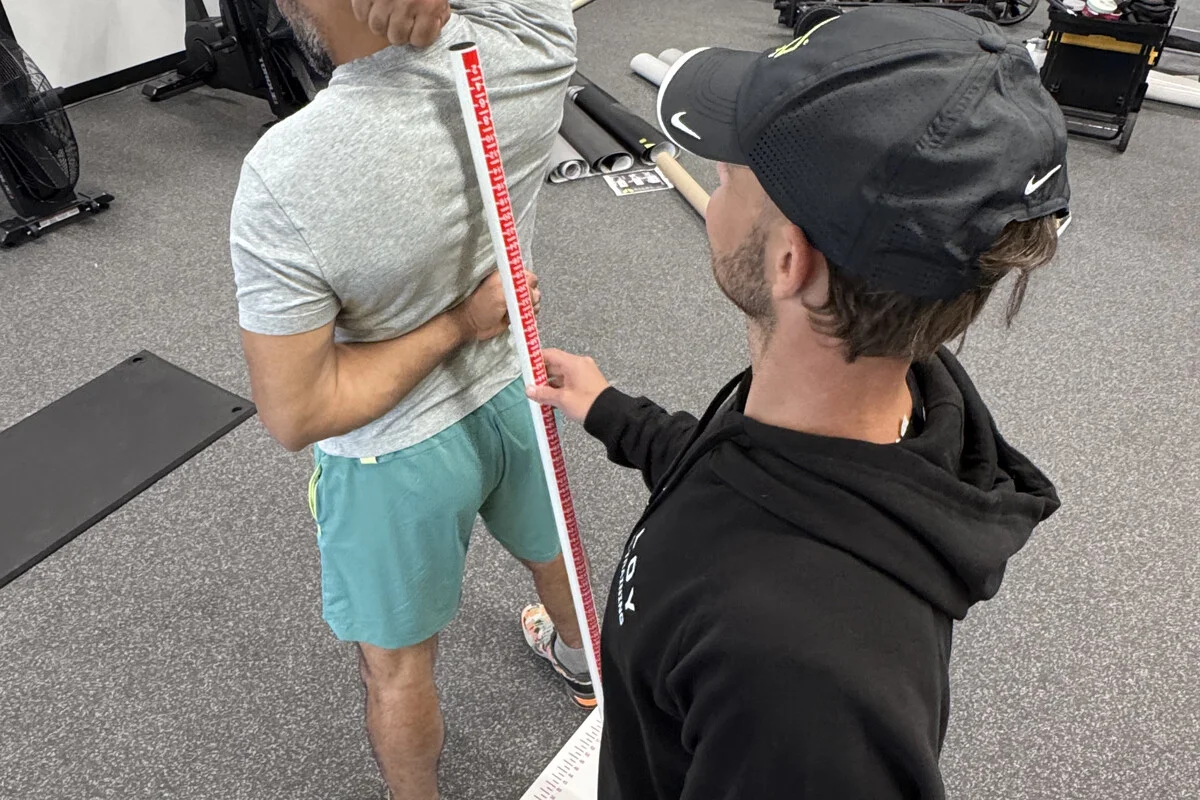
The first 66 days
The hard part of starting usually isn't the first session. It's the stretch after the novelty fades and before the habit sets in.
In a 2010 habit study, 82 volunteers who finished all 12 weeks repeated a new daily behavior. It took an average of 66 days for the behavior to feel automatic, with a range of 18 to 254 days.
Those were simple daily habits, not training sessions, so treat 66 days as a rough guide, not a deadline. The more useful finding: a single missed day had little impact. Miss a Tuesday, show up Thursday.
The CDC's adult guidelines call for at least 2 days a week of muscle-strengthening activity covering all major muscle groups. They add 150 minutes a week of moderate aerobic activity. Most Alloy members train two or three times a week, about 55 minutes a session. At that pace, 66 days is roughly 19 to 28 sessions.
Most members notice improvements in energy, strength, and confidence within the first few weeks. Body-composition change typically shows over 8 to 12 weeks. Long-term results come from consistency.
Membership includes an InBody scan every month to track that change. The scan measures skeletal muscle mass, body fat percentage, visceral fat level, total body water, and a segment-by-segment breakdown. If you'd like a baseline now, book a free InBody scan, no membership required.
Don't do this alone
Dropout is the real risk. A 2006 review of 44 studies cited older estimates that 20 to 50% of new exercisers quit within six months.
The same review compared formats. Exercising in what the authors called a "true group" was superior to a standard exercise class. The standard class did no better than exercising at home with some contact, though home with contact beat home alone.
A larger 2026 review of 71 studies, published in Nature Human Behaviour, was more measured. Group formats had a small edge on functional outcomes and no clear edge on overall activity. Both formats worked.
In our view, a group helps most when it's small and coached. Our small group personal training sessions cap at six people, run about 55 minutes, and are coach-led start to finish. Everyone follows their own program, so two people in one session are often doing entirely different work. Your coach knows your name, your program, and when you've missed a week.
On the other days, walk. The Nine Mile Creek Regional Trail runs through Edina with more than a mile of wooden boardwalk. It's plowed in winter, which matters in Minnesota. The paved loop around the lake at Centennial Lakes Park works too, and walks handle much of the aerobic side of your week.
Start with one session
Alloy Personal Training Edina Southdale opened in October 2026, and the first step is a Starting Point Session. It's a no-pressure visit: a coach assesses how you move, talks through your goals, runs an InBody scan, and builds a plan around you. Book your Starting Point Session, and if you want first pick of session times and priority onboarding, ask about Founding Membership.
This article is general fitness information, not medical advice. Talk with your physician before starting a new exercise program, especially if you have a diagnosis, a recent surgery, or activity restrictions.
Frequently asked questions
Is 55 too late to start strength training?
No, 55 is not too late. A 2010 analysis of 47 studies of adults 50 and over found leg-press strength rose about 29%. A 1994 trial recorded strength gains in nursing-home residents averaging 87 years old. A 2011 analysis found older participants gained less lean mass, and its authors suggested earlier participation yields better outcomes.
How many days a week should a beginner over 50 lift weights?
The CDC recommends at least 2 days a week of muscle-strengthening activity that works all major muscle groups. Two or three coached sessions of about 55 minutes each clear that bar and leave room for rest days. The CDC's separate aerobic goal is 150 minutes of moderate activity a week.
How long until I see results from strength training after 50?
Most members notice improvements in energy, strength, and confidence within the first few weeks. Body-composition change typically shows over 8 to 12 weeks, which a monthly InBody scan can track. The habit itself takes time too; in a 2010 study, new daily habits took an average of 66 days to feel automatic.
Can lifting weights help me keep up with grandkids and travel?
It trains the movements those days ask for. At the median, a two-year-old weighs 27 to 28 lb, according to CDC growth charts. A checked bag on Delta hits overweight fees at 51 lb, so 50 lb is the working limit. Training squats, carries and deadlifts toward loads like those is a practical goal, and results come from consistency.