
Pilates vs weight training isn't an either-or after 40, because the research gives each one a different job. Pilates has research behind it for core endurance, flexibility, balance, and low back pain. It hasn't been shown to move bone: a 2021 meta-analysis of 591 women found no significant bone density change from Pilates or yoga. Heavy, supervised lifting with impact work did, raising lumbar spine density 2.9% in a 2018 trial of 101 postmenopausal women with low bone mass.
- Pilates ranked first for chronic low back pain in a 2020 network meta-analysis and has solid evidence for core endurance, flexibility, and balance. If you enjoy it, keep it.
- On bone, Pilates and yoga showed no significant effect, while heavy, supervised lifting with impact work raised lumbar spine density 2.9% in a 2018 trial of postmenopausal women with low bone mass.
- The 2018 LIFTMOR trial's only adverse event was one minor lower back spasm in eight months of heavy lifting and impact work.
- Bulk is unlikely: across 101 trials, postmenopausal women who lifted gained an average of 0.9 kg of fat-free mass.
- The practical answer is both: keep your Pilates class and add two days of progressively heavier, supervised lifting.
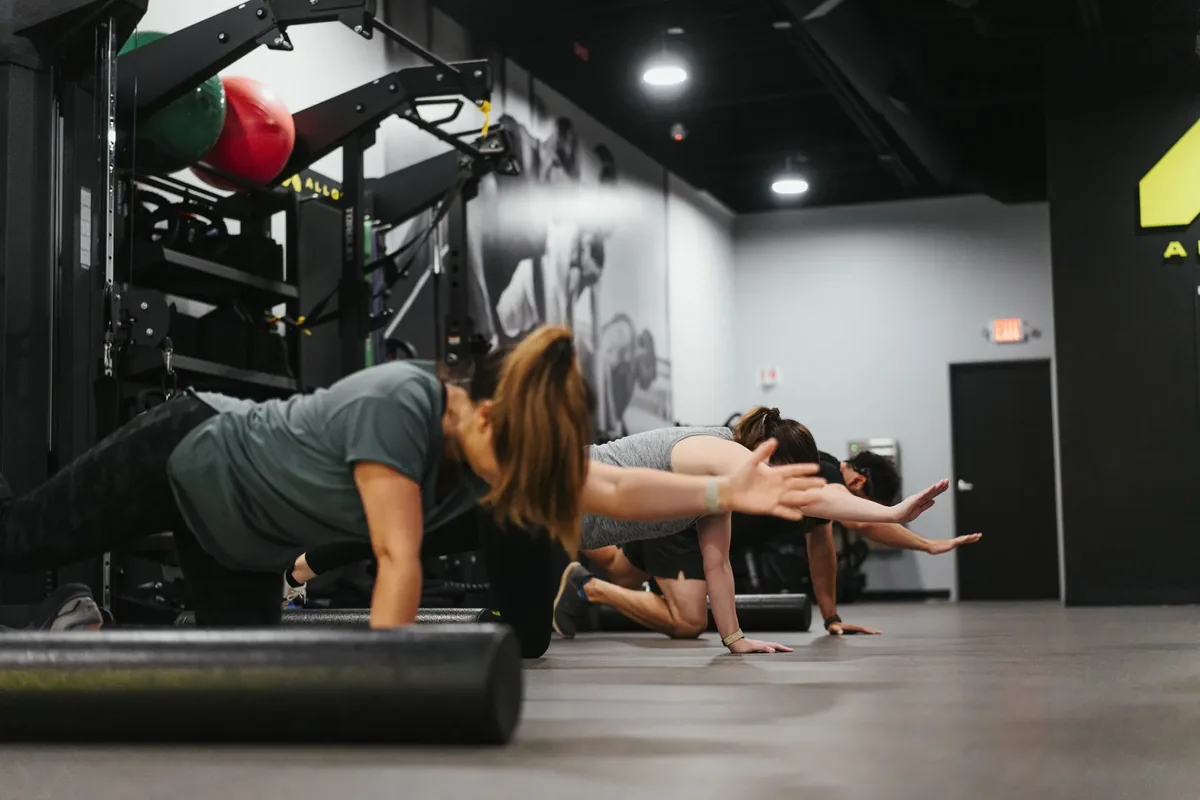
What Pilates does well, according to the research
The back pain evidence stands out, and Pilates deserves full credit for it before we get to the gaps.
The back pain evidence stands out. A 2020 network meta-analysis pooled 89 studies of 5,578 people with chronic low back pain, and Pilates ranked first for pain. Resistance training and stabilization exercise shared the top ranking for physical function. The authors rated the evidence low quality, so read the rankings as a good sign rather than a verdict.
If your back hurts now, see a physician or physical therapist before choosing either one. Pain that travels down a leg, numbness, or new weakness belongs with a clinician first.
The core and flexibility results hold up in middle age. A 2010 randomized trial put 50 active middle-aged men and women through two 60-minute mat classes a week for 12 weeks. They gained abdominal endurance, hamstring flexibility, and upper-body muscular endurance. Posture and balance did not improve compared with the control group.
A 2022 study of 45 healthy middle-aged women found broader gains from 12 weeks of mat Pilates twice a week. Core strength rose 31.5% and lower-limb strength 13.5%, with smaller gains in flexibility (3.5%) and balance (4.2%). It wasn't randomized, so treat the exact figures with some caution.
Balance results depend on who was studied. In middle-aged adults they're mixed, as the two studies above show. The evidence is firmer in adults 60 and over. A 2023 review of 20 randomized trials and 930 people in that age group found a moderate balance improvement (effect size 0.65).
If your reformer class is the hour you look forward to all week, that counts too. Long-term results come from the training you keep doing.
Is Pilates enough? Not for bone or heavy strength
Not on its own. The research points to two gaps: bone density and heavy strength.
Bone is the clearer gap. A 2021 meta-analysis pooled 11 studies of 591 women aged 45 to 78, with programs lasting 12 to 32 weeks. Pilates and yoga did not produce a significant improvement in bone mineral density. The authors make a fair point in Pilates' favor: after menopause, simply holding bone density steady may itself be a positive.
The analysis pooled yoga with Pilates, so yoga gets the same answer on bone.
Heavy strength is the second gap. A reformer's resistance comes from springs. A 2024 reformer study lists a red spring at 0.22 kg per centimeter of stretch and a white spring at 0.06 kg per centimeter. Those are the manufacturer's ratings.
Spring resistance is measured in fractions of a kilogram per centimeter. A barbell is not. In the trial below, women lifted more than 85% of their one-rep max.
Light resistance isn't a design flaw. In the same study of 18 women, the lighter spring produced more core activation. Pilates is built for control under light, changing tension. It isn't built to put a heavy load through your hips and spine.
Pilates isn't the problem. Treating it as your entire strength program is.
What heavy lifting did for women with low bone mass
The study worth knowing is LIFTMOR, a 2018 trial published in the Journal of Bone and Mineral Research. It enrolled 101 postmenopausal women with low bone mass, average age 65.
Forty-nine of them trained twice a week for eight months, in supervised 30-minute sessions of heavy lifting and impact work. The lifting was genuinely heavy: 5 sets of 5 reps at more than 85% of each woman's one-rep max. The other 52 followed a home-based, low-intensity exercise program.
After eight months, lumbar spine density rose 2.9% in the lifting group and fell 1.2% in the home group. Femoral neck density, at the hip, rose 0.3% against a 1.9% loss. The lifters also gained 0.2 cm of height while the home group lost 0.2 cm.
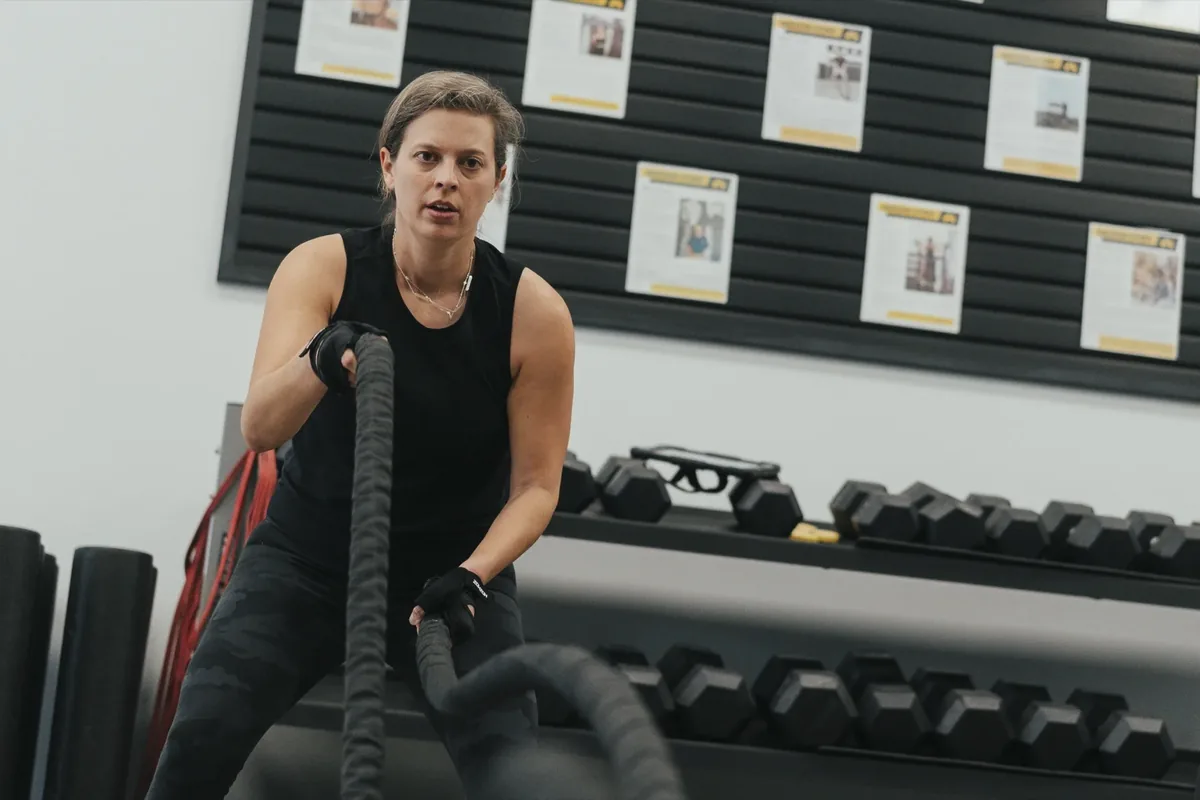
Physical function improved too. Timed up-and-go, functional reach, five times sit-to-stand, and back and leg strength all improved in the lifting group.
For a woman nervous about her back, the safety record matters as much as the headline. Across the trial there was one adverse event, a minor lower back spasm that cost two of 70 sessions. Compliance was 92% in the lifting group and 85% in the home group.
Keep the caveats in view. These women averaged 65 and already had low bone mass, and every lifting session was supervised. That's 30 heavy, supervised minutes, twice a week, for eight months, not a barbell workout copied from a video. We haven't found a trial that pits Pilates directly against heavy lifting in women 40 to 60.
If you've been diagnosed with osteoporosis or osteopenia, get your physician's clearance and any restrictions first. We're glad to coordinate with your physician or physical therapist. For more on the bone side, read Strength Training and Bone Density for Women Over 50.
"I don't want to get bulky"
The research says bulk is unlikely. A 2023 meta-analysis of 101 trials and 5,697 postmenopausal women found resistance training added an average of 0.9 kg of fat-free mass. That's about 2 pounds, spread across the whole body.
Strength changes much more than size. A 2026 meta-analysis of 126 studies and 4,019 women, average age 50.9, found a large effect on strength and a small effect on muscle mass.
The same analysis found no difference in strength gains between premenopausal and postmenopausal women. It also found no link between results and age. That matters if you're 55 and wondering if you missed the window. On this evidence, you didn't.
Across Alloy studios, most members notice more energy, strength, and confidence within the first few weeks. Body-composition change typically shows over 8 to 12 weeks.
If you'd like to see the change in numbers, book a free InBody scan. It measures skeletal muscle mass, body fat percentage, and a segmental breakdown of your arms, legs, and trunk. It isn't a bone density test. Members rescan monthly, so changes in muscle show up as data rather than guesswork.
Pilates vs weight training: a week that keeps both
You don't have to quit the class you love. The CDC's adult guidelines call for at least 2 days a week of muscle-strengthening activity for all major muscle groups. They add 150 minutes of moderate aerobic activity on top.
Here's the week we'd sketch for a woman who already takes reformer on Tuesdays.
| Day | Session | What it's for |
|---|---|---|
| Monday | Coached strength, about 55 minutes | A heavy squat or deadlift pattern, plus an upper-body push and pull |
| Tuesday | Reformer Pilates | Core endurance, control, and flexibility |
| Wednesday | Rest or an easy walk | Recovery, plus aerobic minutes |
| Thursday | Coached strength, about 55 minutes | The other heavy lower-body lift, plus upper body |
| Friday | Rest | Recovery |
| Saturday | Mat Pilates, or a walk on the paved loop at Centennial Lakes | Mobility and balance, or easy aerobic minutes |
| Sunday | Rest | Recovery |
Heavy is relative, and it's earned. You won't start near LIFTMOR's 85% on day one. Our coaches build the load over weeks and add weight only when your form holds.
Within a few miles of Southdale you can find every category: reformer studios, barre, yoga, and big-box clubs. Keep the class you like and add the lifting it doesn't cover. When a Minnesota winter makes the Saturday walk miserable, take the mat class instead.
How a coached small group handles the lifting half
Heavy lifting is the half of the week that needs a coach. Someone has to set the weight, check your hinge before the bar leaves the floor, and decide when you're ready for more.
That's what small group personal training is built for. Sessions are capped at six people, run about 55 minutes, and are coach-led start to finish. Everyone follows their own program, so the woman next to you may be doing entirely different work.
Your program starts from an assessment of how you move, and your coach tracks your lifts over time. If a back history or a bone density result changes what's appropriate, the program changes with it. Our strength training for women over 40 page covers how we program around perimenopause, bone density, and old injuries.
Years of Pilates are often a head start. You already know how to brace and move with control.
Where to start
Alloy Personal Training Edina Southdale opens on York Avenue in October 2026, and the first step is a Starting Point Session. It's a no-pressure visit. A coach assesses how you move, talks through your goals and history, runs an InBody scan, and builds a plan around you.
Bring your Pilates schedule and we'll fit the lifting to it. Book your Starting Point Session, or join as a Founding Member for first pick of session times.
This article is general fitness information, not medical advice. Talk with your physician before starting a new exercise program, especially if you have a diagnosis, a recent surgery, or activity restrictions.
Frequently asked questions
Is Pilates or yoga enough for bone density after 40?
Not on its own, based on current research. A 2021 meta-analysis of 11 studies and 591 women aged 45 to 78 found no significant bone density change from Pilates or yoga. In a 2018 trial of 101 postmenopausal women with low bone mass, supervised heavy lifting with impact work raised lumbar spine density 2.9%. The low-intensity home exercise group lost 1.2% over the same eight months.
Is Pilates strength training?
It builds some strength, but it isn't heavy lifting. A 2022 study of 45 middle-aged women found a 13.5% gain in lower-limb strength after 12 weeks of mat Pilates. Reformer springs, though, are rated in fractions of a kilogram per centimeter of stretch. The 2018 bone trial used loads above 85% of each woman's one-rep max.
Will lifting weights make a woman over 40 bulky?
It's unlikely, based on the research. A 2023 meta-analysis of 101 trials found postmenopausal women gained an average of 0.9 kg of fat-free mass with resistance training. A 2026 meta-analysis of 4,019 women found a large effect on strength and only a small effect on muscle mass.
Can I do Pilates and strength training in the same week?
Yes, and it's the approach we'd suggest for most women over 40 who already enjoy Pilates. The CDC calls for at least 2 days a week of muscle-strengthening activity, and two lifting days plus your usual class covers that. A simple split is lifting Monday and Thursday, reformer on Tuesday, and mat Pilates or a walk on Saturday.