
Here's how to find a personal trainer worth hiring: check that the certification is accredited, which takes about a minute on the USREPS registry. Then ask how they'll assess you before programming, how they track progress, and what the contract says about canceling. If your first session is a hard workout instead of an assessment, keep looking. Minnesota law also gives you cancellation rights worth knowing before you sign.
- Check the certification on USREPS, which lists only accredited certifications and over 130,000 verified credentials.
- A real first session is an assessment: health questions, a movement screen, and a body composition baseline.
- In a 2014 trial, men aged 30 to 44 gained 1.3 kg of lean mass with a trainer and none on their own.
- Ask how many people one coach watches. In a study of young men, one coach per 5 beat one per 25.
- Minnesota's health club law gives you three business days to cancel for a full refund and bans termination fees after that.
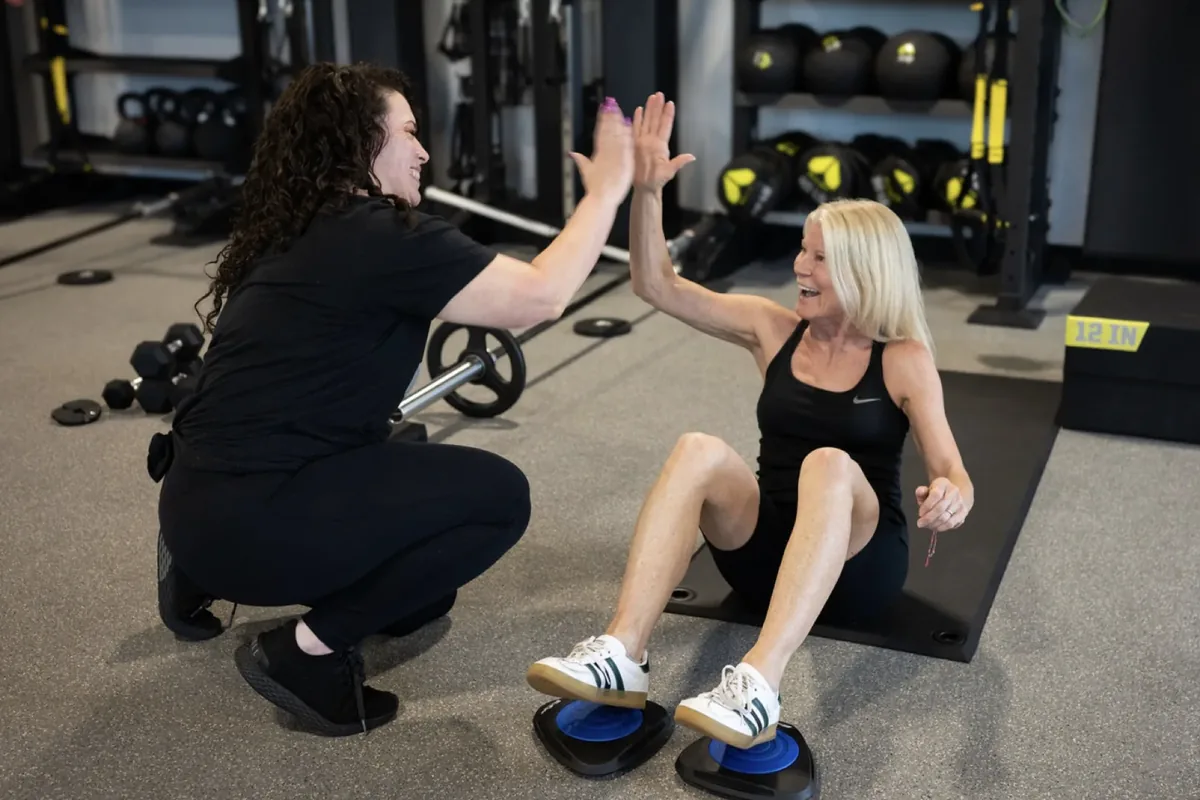
How to find a personal trainer: check the certification first
Credentials are the first thing to look for in a personal trainer, because they're the easiest thing to verify before you meet. A certificate won't tell you whether someone coaches well. An accredited one means the certification met an outside body's standards.
Start with the U.S. Registry of Exercise Professionals, or USREPS. It lists only NCCA-accredited or ISO 17024 certifications and holds over 130,000 verified credentials. Search the trainer's full name and look for the certification they told you they hold.
Six certifying organizations belong to the registry: ACE, ACSM, NCCPT, CSCCa, NCSF, and NSCA. A certification from another organization may not appear, and that alone isn't a red flag. NASM, for example, is NCCA-accredited but isn't a registry member. Ask which body accredits it and when the trainer last renewed it.
Then ask about fit: who they usually train, and whether they've coached people over 40 or people returning after years away. Ask what they do when a client's knee or shoulder complains mid-set. The right answer is that they change the exercise and coordinate with your physician or physical therapist. A diagnosis is the wrong answer.
What a real first session looks like
A real first session is an assessment. It starts with questions about your health history, current activity, past injuries, and goals.
Specific goals are the most useful. "Hike the Braemar Park trails all fall" gives a coach more to work with than "get in shape." Anything that sounds medical goes to your physician or physical therapist before it goes into a program.
Next comes a movement screen. The Functional Movement Screen, for example, scores seven movement patterns from 0 to 3. They are the deep squat, hurdle step, in-line lunge, shoulder mobility, active straight leg raise, trunk stability push-up, and rotary stability. Your lowest scores show the coach where your program should start.
Then comes a baseline measurement. An InBody scan measures skeletal muscle mass, body fat percentage, visceral fat level, total body water, and a segment-by-segment breakdown. It gives you numbers to measure progress against later.
You should leave with a plan: what you'll train, how often, and what the first few weeks are building toward. Our Starting Point Session runs in that order.
Ask how they program, not how hard they train you
The most useful questions to ask a personal trainer are about programming, not intensity. Anyone can make you tired in an hour. The skill is making next month harder than this month, on purpose.
Research favors the planned approach. A 2017 meta-analysis of 18 studies found periodized, planned training beat unplanned training for maximal strength, with an effect size of 0.43.
Three questions tell you most of what you need. How do you choose my starting weights? How do you track what I lift from week to week? What happens when a lift stalls?
Good answers are specific: loads set from your assessment, a written log, planned increases, and a new plan when progress stops. Vague answers sound like "we keep it fresh" or "you'll never do the same workout twice." Variety feels good in the moment. It's also the opposite of a plan.
Soreness gets its own warning. Being sore the next day isn't a measure of progress. Adding weight, reps, or control over the weeks is.
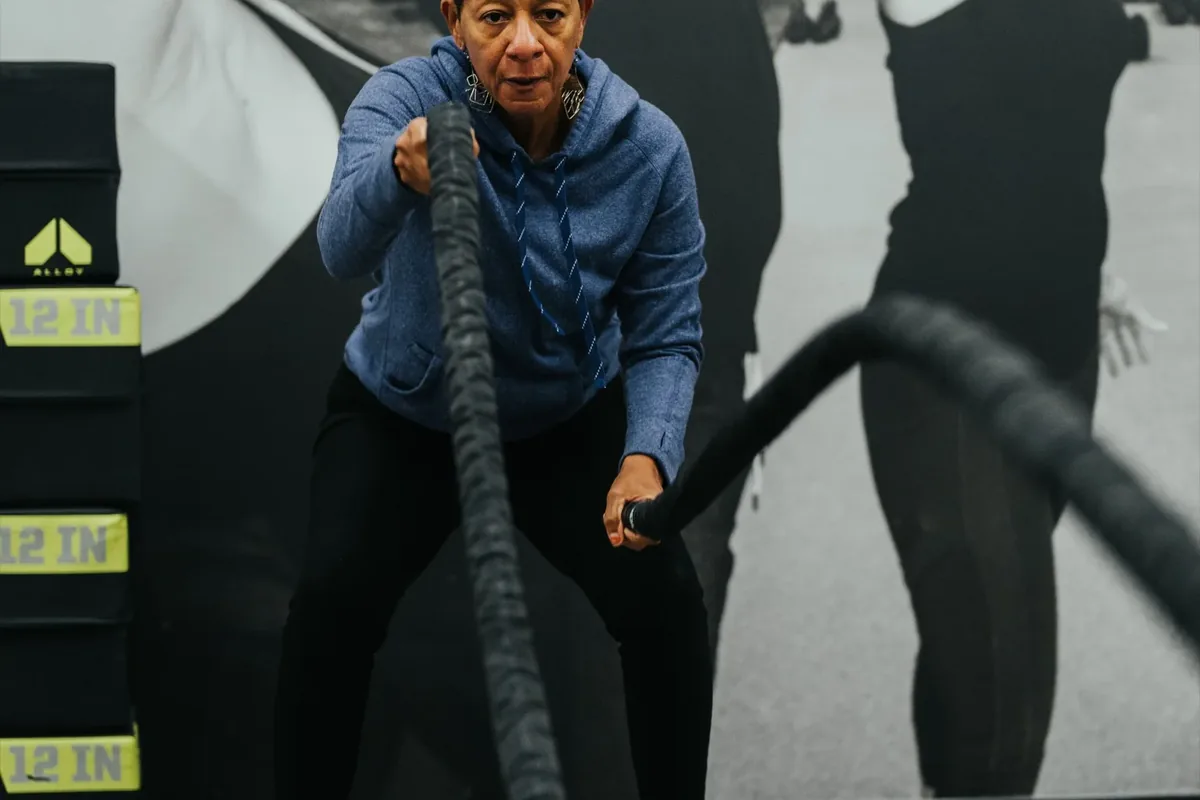
Does training with a coach make a difference?
For strength, the answer is yes. For body composition, the evidence is much weaker. Two of the five studies below used young adults, so read those as direction rather than proof for your age.
| Study | Who was studied | What supervision changed |
|---|---|---|
| Storer et al., 2014 | 34 men aged 30 to 44, 3 days a week for 12 weeks | Trainer-led group gained 1.3 kg of lean mass; self-directed group gained none. Chest press up 42% vs 19% |
| Gentil and Bottaro, 2010 | 124 untrained young men, 11 weeks | Bench press up 15.9% with one coach per 5, vs 10.22% with one per 25 |
| Ratamess et al., 2008 | 46 resistance-trained women, average age 26.6 | Women training with a personal trainer chose loads averaging 51.4% of their one-rep max; without one, 42.3% |
| Fisher et al., 2022 | Exploratory meta-analysis of 12 studies (301 supervised, 276 unsupervised) | Modest effect on strength (effect size 0.40); almost none on body composition (0.07) |
| Lacroix et al., 2017 | Meta-analysis of 11 studies, adults 65 and older | Larger strength and power gains with supervision (effect size 0.51) |
Storer's trial is the closest in age to readers around 40, and it was randomized. It was also men only, and its lean mass result is a single trial. The pooled data in Fisher's review are the better guide on body composition. If a trainer promises the scale will move because they're watching you, that's a sales line.
Ratamess measured something simple: the weight people pick for themselves. Those were young, experienced lifters. A coach's job is to close that gap on purpose, with loads set from your assessment and raised on a schedule.
The Lacroix review adds a practical note for adults 65 and older. Its authors recommend supervising two of every three weekly sessions.
Two limits are worth knowing. The two training trials in the table ran 11 and 12 weeks, which is short. We also couldn't find a trial comparing injury rates with and without a coach in adults over 40. Be wary of anyone who promises a trainer will keep you injury-free.
Coach-to-client ratio: the number nobody asks about
Ask how many people one coach will be watching at once. That number separates your options more than anything on a price sheet.
In the Gentil and Bottaro study of untrained young men, both groups followed identical programs. The only difference was the ratio: one coach for every 5 trainees, or one for every 25. Beyond bench press, strength in the knee extensors, the muscles on the front of the thigh, rose significantly (11.8%) only in the 1:5 group.
More of the 1:5 group also trained at maximal intensity, while attendance didn't differ. The difference was effort, not showing up.
The study didn't test one-on-one, and it didn't test six. It points one direction: fewer people per coach meant harder work and bigger gains. That's why we cap small group sessions at six, coach-led for all 55 minutes, with every person on their own program.
What hiring a personal trainer costs in the Twin Cities
Marketplace listings for Minneapolis put personal trainers between $35 and $90 per hour. One-on-one training at an established studio in the Twin Cities runs well over $100 a session. A range that wide covers very different experience levels and setups, so compare what's included along with the rate.
The number that matters is the rate times how often you'll train. Strength is built over months and years of consistent, progressively harder work. At one-on-one prices, twice a week adds up fast. That's the tension every option around Southdale is trying to solve, and we lay out how one-on-one and small group compare.
If you're looking for a personal trainer in Edina, you'll find five ways to buy coaching. Big-box clubs have floor trainers who sell sessions on top of a membership. Boutique class studios lead a room through the same workout. One-on-one studios give you a coach's full attention at the top of the price range.
Thirty-minute strength studios build everything around a short session. Small group personal training splits one coach among a handful of people, each on their own program. Most Alloy members train two or three times a week in that format. Whichever you're weighing, ask the same two questions: how many people per coach, and whose program am I doing?
Read the contract: what Minnesota law already gives you
Minnesota law gives health club members two protections: a window to cancel for a full refund, and a fee-free exit later. Under Minnesota Statutes section 325G.24, you can cancel "before midnight of the third business day" after joining. The club then owes you a full refund within 10 days.
After that window, members "may terminate membership at any time," and "a club must not impose a termination fee or any other liability." Termination takes effect no later than 30 days after your notice is verified. The statute also says these rights "may not be waived."
The law covers businesses that meet its definition of a health club. If you're hiring an independent trainer, ask whether it applies to your agreement. Either way, get the cancellation terms in writing and read that section first.
Some red flags should end the conversation. Pressure to sign before your first session is one. So are supplement sales, guaranteed results, and skipped health questions. A trainer who tells you what's wrong with your shoulder has crossed into diagnosis, which belongs with your physician or physical therapist.
Start with an assessment
Alloy Personal Training Edina Southdale opens in October 2026 at 6805 B York Ave S, minutes from Southdale Center. Your Starting Point Session covers a movement assessment, a conversation about your goals and history, an InBody scan, and a plan built around you. It's a no-pressure visit, and you'll get a membership recommendation with straightforward pricing before you decide anything. Book your Starting Point Session, and ask about Founding Membership if you'd like first pick of session times.
This article is general fitness information, not medical advice. Talk with your physician before starting a new exercise program, especially if you have a diagnosis, a recent surgery, or activity restrictions.
Frequently asked questions
How do I check if a personal trainer is certified?
Search the trainer's name on USREPS, the U.S. Registry of Exercise Professionals. It lists only NCCA-accredited or ISO 17024 certifications and holds over 130,000 verified credentials. If the certification comes from an organization outside the registry, ask which body accredits it.
How much does a personal trainer cost in the Twin Cities?
Marketplace listings for Minneapolis put personal trainers between $35 and $90 per hour. One-on-one training at an established studio in the Twin Cities often runs well over $100 a session. Small group personal training splits one coach among a few people, each on their own program.
Is training with a personal trainer better than training alone?
For strength, the research says yes. In a 12-week trial of 34 men aged 30 to 44, the trainer-led group gained 1.3 kg of lean mass. That group's chest press improved 42%, versus 19% for the self-directed group. A 2022 meta-analysis of 12 studies found almost no effect of supervision on body composition.
Can I cancel a personal training contract in Minnesota?
If the business is a health club under state law, yes. You can cancel before midnight of the third business day after joining for a full refund. After that, you can end your membership at any time without a termination fee. With an independent trainer, ask whether the law covers your agreement and get the cancellation terms in writing.