
For most adults over 40, a strength workout should run about 55 minutes, two or three times a week. A 30-minute session is real training, and it beats skipping. But most answers to "how long should a workout be" give a range and skip the math. Add a proper warm-up and the rest periods used in research on adults 50 and older, and 30 minutes forces a cut.
- About 55 minutes, two or three times a week, fits the 30 to 60 minute sessions studied in adults 50 and older.
- Rest between sets takes more of a well-built session than the lifting does.
- A 30-minute session counts if it reaches at least 4 weekly sets per muscle group.
- What 30 minutes usually cuts is the warm-up, longer rests as loads climb, and time to coach.
- Training two or three times a week, for months, matters more than any one session's length.
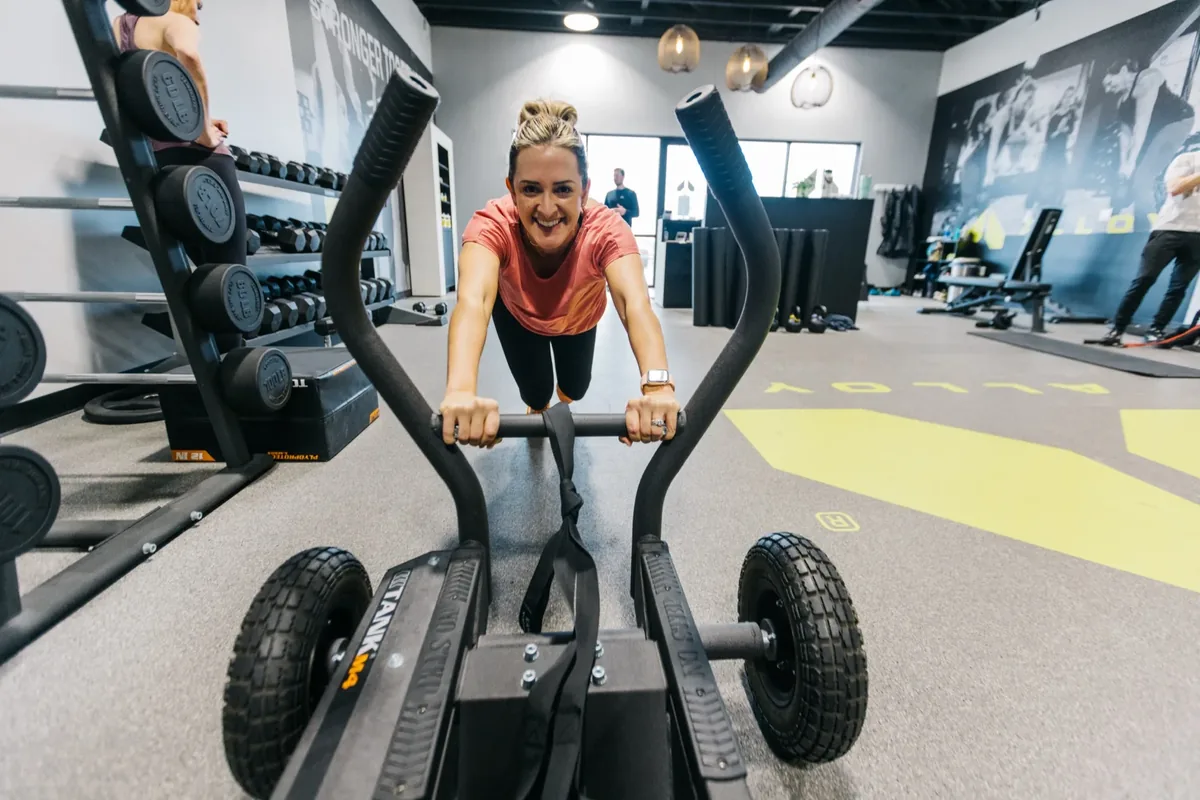
Why 55 minutes, two or three times a week
For adults 50 and older, the research answer to "how long should a strength training session be?" is 30 to 60 minutes. That range comes from a 2019 position statement on resistance training by the National Strength and Conditioning Association, or NSCA. The statement drew on studies in that age group, where participants trained 2 to 3 times a week with 2-minute rests between sets.
Fifty-five minutes sits comfortably inside that range, and 30 sits at the very bottom. The statement's summary calls for 2 to 3 sets of 1 to 2 multijoint exercises per major muscle group. Loads run 70 to 85% of your one-rep max.
A 2023 analysis of 178 trials in healthy adults backs up that weekly rhythm. For strength, heavier loads and multiple sets three times a week ranked highest. For muscle size, in the same paper's 119-trial network, twice a week.
The NSCA statement reports strength declines of 0.8 to 3.6% per year in healthy adults 50 and older. No trial has timed sessions in adults 40 to 50 specifically. The statement for adults 50 and older is the closest evidence, and it is what we program from in your 40s. Our page on strength training for adults over 40 explains how we program for it.
How long should a workout be? Add up the minutes
Here's what fills a 55-minute session for an adult over 40, built line by line. Lines marked coaching practice show how coaches typically use that time, and the others come from published research.
| Block | Minutes | Basis |
|---|---|---|
| Warm-up, exercise-specific | 8 to 10 | Coaching practice; a 2021 review favors exercise-specific warm-ups |
| 5 exercises × 3 sets, about 45 to 55 seconds per set | 12 to 14 | 7 to 9 reps at about 6 seconds per rep (2015 meta-analysis) |
| 14 rests × 90 to 120 seconds | 21 to 28 | 60 to 120 seconds for untrained lifters (2018 review); 1.5 to 3 minutes in the NSCA's reviewed studies |
| Load changes, cueing, transitions | 5 to 8 | Coaching practice |
| Total | 46 to 60 | Fits a 55-minute session |
The set times come from a 2015 meta-analysis of 25 randomized trials with 819 participants, average age 70.4. Its largest strength effects came with 2 to 3 sets of 7 to 9 reps at 70 to 79% of one-rep max, twice a week. The same dose included about 6 seconds of tension per rep, so a set runs roughly 45 to 55 seconds.
Rest decides the total. Fifteen working sets leave 14 rests, and at 90 to 120 seconds each, rest alone takes 21 to 28 minutes. That's more than the lifting itself.
The NSCA's program table lists 8 to 10 exercises at 1 to 3 sets each. Using the table's math, 8 exercises at 2 sets is 16 working sets, which adds only about 2 to 3 minutes. Exercise count barely moves the clock. Rest does.
Rest is the line item people cut first
Rest is usually what shrinks in a 30-minute session, and the research on it cuts both ways.
A 2018 review of 23 studies with 491 participants concluded that robust strength gains can be achieved even with rests under 60 seconds. For untrained lifters, 60 to 120 seconds was sufficient. For trained lifters, the authors found rests longer than 2 minutes are required to maximize strength gains.
A 2016 trial shows what longer rests can add. Twenty-one young, trained men did 3 total-body sessions a week for 8 weeks, at 3 sets each of 7 exercises. One group rested 1 minute between sets and the other rested 3. The 3-minute group gained significantly more squat and bench press strength, plus more front-thigh muscle thickness.
Now look at the clock. That's 21 sets a session, and by our arithmetic, 2 extra minutes of rest after each adds roughly 40 minutes. Same lifts, same sets, a very different session.
One finding points the other way. In the 2015 meta-analysis above, 60-second rests between sets were linked to the largest strength effect. That came from comparing across studies, not a head-to-head rest trial.
So short rests work, especially while you're new. As loads climb, the evidence from trained lifters favors longer rests.
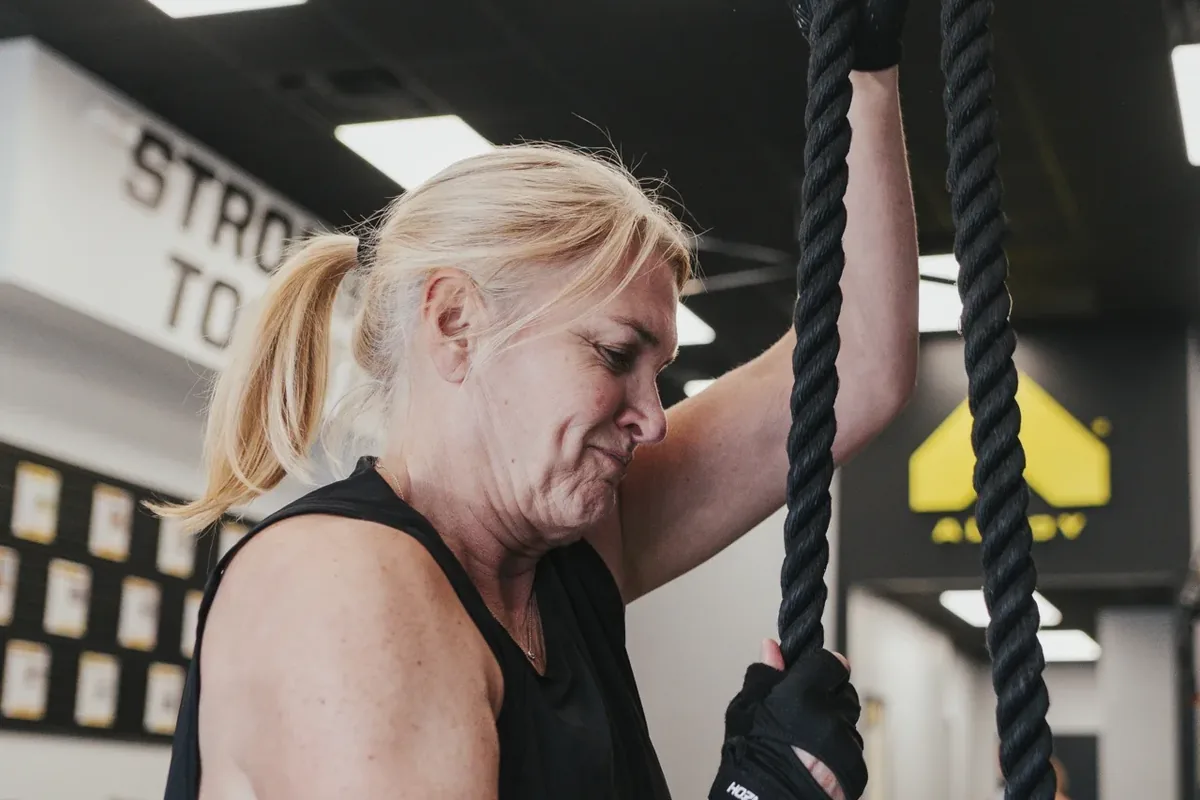
What 30-minute strength training can honestly do
Short sessions have solid research behind them. A 2021 review titled "No Time to Lift?" set a minimum of 4 weekly sets per muscle group. Each set should use a load you can lift only 6 to 15 times.
The review called for at least a leg press, an upper-body pull, and an upper-body push. It also noted that supersets, drop sets, and rest-pause sets roughly halve training time.
A realistic 30-minute version has a 3 to 4 minute warm-up and 3 exercises at 3 sets each, about 7 minutes of lifting. Add 8 rests of 60 seconds and about 4 minutes of transitions, and it runs about 24 minutes.
That session holds up. Done twice a week, each lift gets 6 weekly sets, clearing the review's minimum of 4. Its 60-second rests sit at the low end of the 60 to 120 seconds the 2018 review found sufficient for untrained lifters. And every prescription in the 2023 analysis beat doing nothing.
Even the NSCA statement notes that sessions lasting 30 minutes or more have been associated with fewer difficulties with activities of daily living. If a 30-minute strength studio is what gets you training twice a week, take it.
Where 30 minutes falls short after 40
Thirty minutes usually comes up short in four places. None of them makes a short session worthless.
The warm-up shrinks
The 30-minute version has room for a 3 to 4 minute warm-up, while the 55-minute version has 8 to 10. A 2010 meta-analysis of 32 studies in sports populations found warm-ups improved performance in 79% of the measures examined. The evidence on warm-ups and injury is less clear, so we won't promise that.
The extra minutes buy time to rehearse each lift before it gets heavy. What that warm-up includes should depend on how you move, which is what the movement assessment at a Starting Point Session shows your coach.
Rests can't grow with you
The 30-minute version runs 60-second rests, while the studies behind the NSCA statement used 1.5 to 3 minutes. Once your loads get heavier, a 30-minute clock doesn't have the extra minute to give.
Three exercises instead of 8 to 10
Three exercises clear the 2021 review's floor, and the NSCA's program table lists 8 to 10. Supersets can narrow that gap, and good short sessions use them. With full rests and a real warm-up, though, the math still doesn't fit.
Less time to coach
The 55-minute table sets aside 5 to 8 minutes for load changes, cueing, and transitions. The 30-minute version has about 4. A 2017 meta-analysis of 11 studies in adults 65 and older found supervised programs produced larger strength and power gains than unsupervised ones.
The NSCA statement adds that supervision of the workouts "may be important." A 30-minute session can be coached. The clock leaves less room to teach a new lift, change a load after a rough set, or swap an exercise that bothers your shoulder.
In small group personal training, capped at six people on individual programs, rest periods are when a coach gets to each person. Longer rests help make that coaching work.
The week matters more than the session
Most of the numbers that matter are weekly, not per workout.
The research behind the popular "30 minutes is enough" line is weekly, too. A 2022 meta-analysis of 16 cohort studies linked muscle-strengthening activity with lower risk of all-cause mortality, cardiovascular disease, cancer, and diabetes. The largest reduction, approximately 10 to 20%, came at approximately 30 to 60 minutes a week. That's per week, not per session, and it's an association, not proof of cause.
The curve was J-shaped, so more wasn't always better. More work isn't what 55 minutes is for, though. In the table above, the lifting takes 12 to 14 minutes, and the remaining time is warm-up, recovery between sets, and coaching.
Most people in midlife don't reach the guideline of 2 strength days a week. In 2020, only 29.9% of men and 23.8% of women aged 45 to 64 met it, according to national survey data.
That's the real contest. It isn't 30 minutes against 55. It's 2 sessions a week against none, and 3 short sessions you keep beat 2 long ones you skip.
The year matters too. In the 2015 meta-analysis, the largest strength effects came from programs lasting 50 to 53 weeks. If you're past 50, our guide to strength training after 50 covers what works and what to skip.
Fitting 55 minutes into an Edina week
Most Alloy members train two or three times a week. At 55 minutes each, that's 110 to 165 minutes a week, under three hours.
The studio opens at 6 AM on weekdays and 7 AM on Saturday. A 6 AM session on York Avenue wraps up before 7, and the studio stays open until 8 PM Monday through Thursday.
Strength sessions are only part of the week. On the days in between, a walk at Braemar Park or around the ponds at Centennial Lakes adds easy aerobic work. A Minnesota winter is where the routine gets tested. When those paths ice over, two indoor sessions on the calendar keep the week intact.
Where to start
Alloy Personal Training Edina Southdale opened in October 2026. Every session is capped at six people and coached start to finish for about 55 minutes, warm-up and rest included. A no-pressure Starting Point Session comes first: a movement assessment, a talk about your goals, an InBody scan, and a plan built around you. Book your Starting Point Session. If you'd like first pick of session times, ask about Founding Membership.
This article is general fitness information, not medical advice. Talk with your physician before starting a new exercise program, especially if you have a diagnosis, a recent surgery, or activity restrictions.
Frequently asked questions
Is 30 minutes of strength training enough?
It's enough to make progress if you reach at least 4 weekly sets per muscle group, the minimum in a 2021 review. A 2018 review found robust strength gains even with rests under 60 seconds. What 30 minutes usually can't hold is a full warm-up and the 1.5 to 3 minute rests in the studies the NSCA reviewed. That's why we recommend about 55 minutes after 40.
How many days a week should I strength train after 40?
At least 2, which is the muscle-strengthening guideline for adults. The NSCA's position statement, based on studies of adults 50 and older, recommends 2 to 3 nonconsecutive days. A 2023 analysis of 178 trials ranked heavier, multi-set training three times a week highest for strength.
How long should I rest between sets?
A 2018 review of 23 studies found 60 to 120 seconds sufficient for people new to lifting. For trained lifters, it concluded that rests longer than 2 minutes are required to maximize strength gains. The studies behind the NSCA's position statement on adults 50 and older used 1.5 to 3 minutes. In a 2015 meta-analysis of participants with an average age of 70.4, 60-second rests were linked to the largest strength effect.
Is a longer strength workout always better?
Not necessarily. A 2022 meta-analysis of cohort studies found the strongest association with lower all-cause mortality risk at approximately 30 to 60 minutes a week of muscle-strengthening activity. Past that range, the association weakened. A 55-minute session is about fitting in a warm-up, full rests, and coaching, not more lifting.